
Circuits
ex-GP Track of Dijon-en-Prenois
Useful links: overview lodging possibilities - map (with zoom-possibilities & routeplanner
|
The foundation for the construction of the meanwhile legendary former F1 track of Dijon-en-Prenois was laid in 1968 by the French multi-sportsman François Chambelland, who succeeded - with the cooperation of the French heroes François Cevert and Jean-Pierre Beltoise - to open this "Stade Automobile de Dijon-Prenois" in 1972. |
 |
 |
In that same year, the heroic battle for 2° place between the Canadian Gilles Villeneuve and the French favourite René Arnoux made the track of Dijon-Prenois world famous (you must take a look at the last 2 laps on video!). Two years later, in 1981, the young Alain Prost won his first F1 GP at Dijon. Afterwards, he would win another 50 Formule 1 victories and become 4 times world champion. |
 |
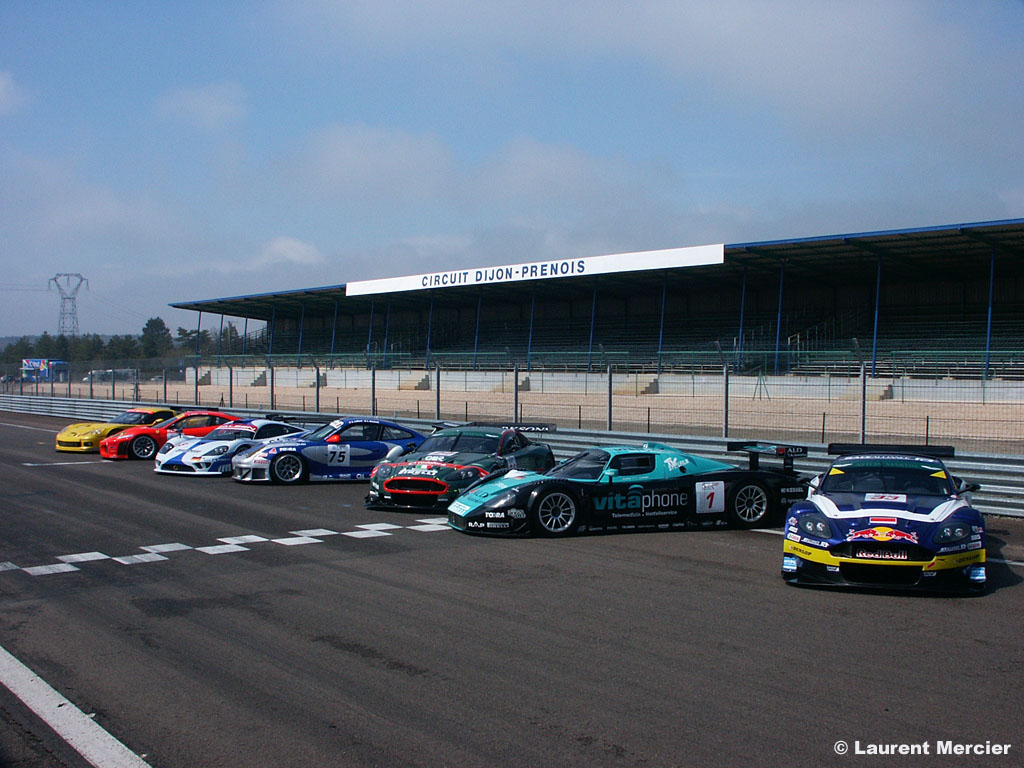 |
Since the F1 track moved to Magny-Cours, several races from different race-categories were and are held at Dijon, like a.o.: the European and World Cahampionship GT for trucks, the F 3000, the world championship for sportprototypes, the historic F1 GP's, the "Grand Prix Dijon Côte d'Or Super Série FFSA", the "6 heures de Dijon - Série FFSA", the "Allstars V8 Cup", etc.
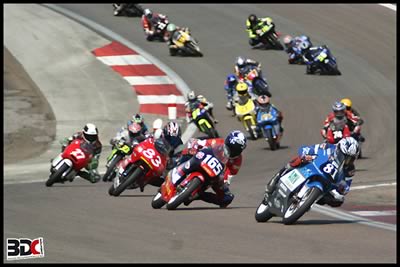
Amongst the biggest actual events, there are the "Grand Prix de l'âge d'or", the "Festival Ferrari", the "Coupes Moto Légende" (every year more than 35.000 spectators), the "Trophée Historique de Bourgogne", etc. |
|
Since the commission of a new track director in 2007, there is a new wind that blows over the track which got newly asphalted for 2008. There were also important infrastructural works done to improve the safety in two importnat turns.
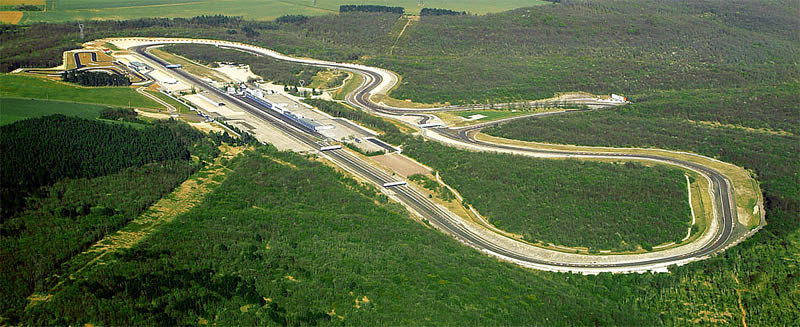
After having visited the track - and having followed its evolution - in 2006, 2007 and at the beginning of 2008, the moment has come now - we are writing 2008 - to put this legendary track of 3,8 km with breathtaking differences in height, that has not been changed qua lay-out since 1975, on our calendar.
|
 |